 Formed of Light
How to Prepare for a Body Projection Session
Published June 4, 2026 · Timothy Osier
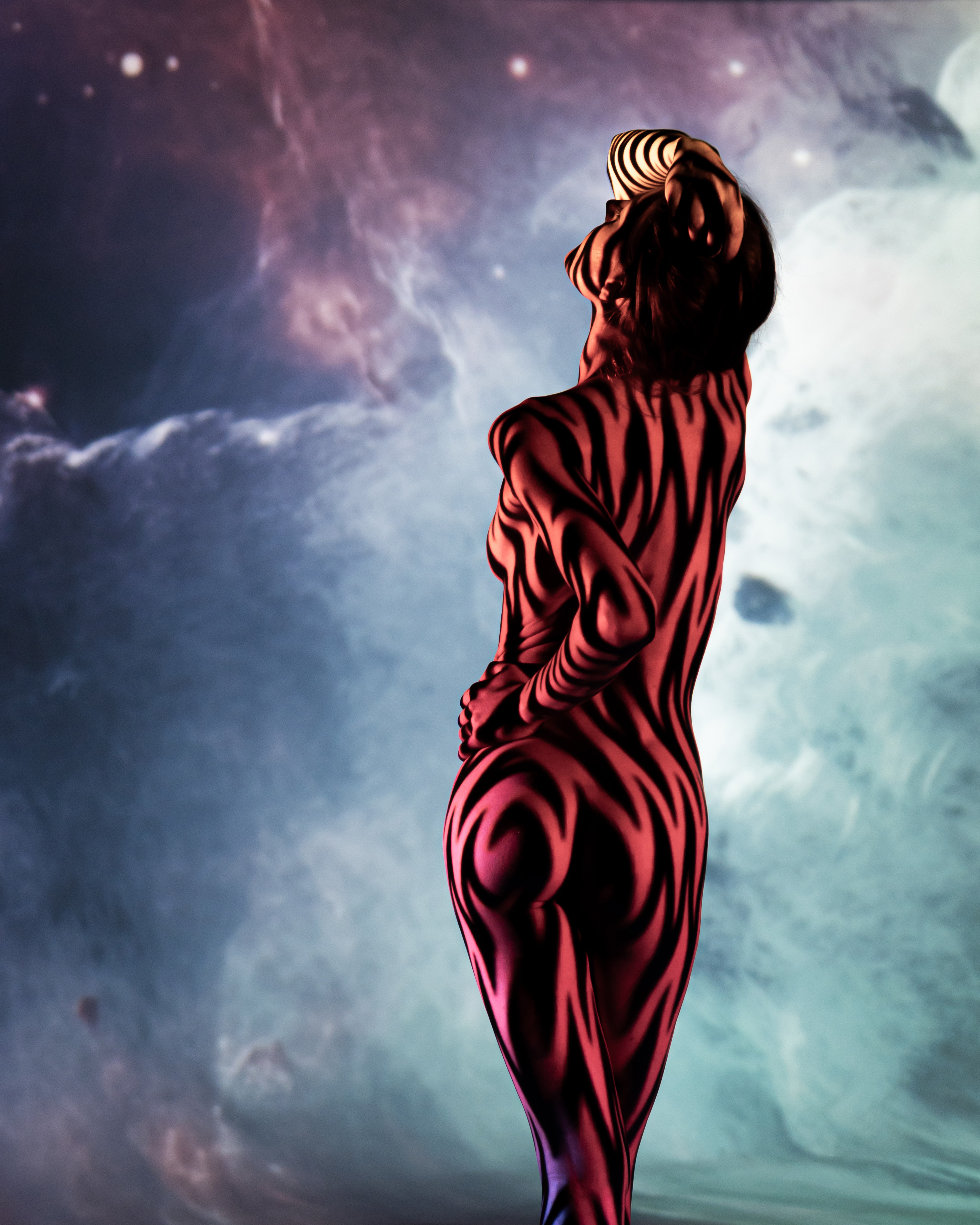
Body projection uses light to paint across the body. Geometry, color, water, stars, texture, and abstract motion become part of your skin for a little while. The projection is not just a background; your body shapes it.
Because the projector is the primary light source, preparation is a little different from a standard portrait session. The goal is simple: give the light a clean surface so the projected image can stay crisp, vibrant, and uninterrupted.
The clean-surface rule
Arrive in very loose clothing: a soft sundress, oversized loungewear, robe, or anything that does not press into your skin. Avoid bras, tight leggings, jeans, socks with strong elastic, or anything that leaves waistband or strap marks.
Projection marks are sometimes less obvious than bodyscape marks, but they can still interrupt the illusion. We want light to wrap across your natural shape instead of catching on the memory of a bra strap or waistband.
Wardrobe for projection
For the most seamless body projection images, visible skin usually photographs best because the projected light can travel without interruption. Topless or nude work is common in this style, but never required.
If you prefer coverage, choose nude-to-you, seamless, form-fitting pieces. Skin-toned thongs, adhesive bras, pasties, or very simple garments usually work better than dark underwear or bright white fabric. Dark fabric absorbs projection and can disappear into shadow; pure white can reflect brighter than skin and pull attention away from the body.
The goal is not a specific amount of exposure. The goal is continuity: light, skin, and fabric reflecting in a way that feels intentional.
Skin and grooming
On the day of your session, skip heavy lotions, oils, shimmer products, and glitter unless we have specifically planned them. Some products create bright hot spots under the projector and can blow out detail in the projected pattern.
Hydrate well before the session. Hydrated skin tends to take light beautifully, and the colors often feel richer and deeper.
As with other body-focused work, remove watches, wrist hair ties, and tight jewelry at least two hours before arrival.
Hair and shape
Hair changes how projection reads. Hair down can break the pattern into strands and create a softer, more chaotic texture. Hair up can open the neck, shoulders, and back for a cleaner sculptural look.
If you have longer hair, bring clips, pins, or ties so we can try both. Small changes in hair shape can completely shift the image.
What the room feels like
Projection sessions are photographed in a darker studio environment so the projected light can stay vivid. It may feel more like a darkroom than a traditional portrait studio.
There is usually more slow movement than fixed posing. The same projection can look completely different when you turn a shoulder, bend an elbow, stretch through your spine, or shift your weight. We will work with a mix of guided movement and still poses so you have a wide range of images to choose from.
One practical note: avoid looking directly into the projector lens. It is bright. I will guide your gaze so you stay comfortable.
What to bring
- A robe. Bring your own if it helps you relax between sets.
- Nude-to-you seamless underwear. Useful even if you are considering nude images, because it gives you social-media-friendly options too.
- Pasties or adhesive coverage. Optional, but helpful if you want more coverage without breaking the projection too much.
- Hair clips or pins. Especially if you have longer hair.
- Your playlist. Projection work has a flow-state energy. Bring music that helps you move slowly and confidently.
Quick checklist
- Wear loose, flowy clothing with no tight elastics.
- Remove jewelry, watches, and wrist ties at least two hours before arrival.
- Keep skin clean, with no heavy lotion, shimmer, or oil.
- Consider nude-to-you seamless wardrobe options if you want coverage.
- Come ready to move slowly and see test frames as the light transforms.
Projection is abstract by nature, so I will show you images on our teathered laptop throughout the session. It is one thing to see a flat pattern on a wall; it is another to watch it become three-dimensional once it lands on you.
To understand the style more fully, read What Is Body Projection Photography? or compare it with Living Canvas.

Founder and photographer at Formed of Light Studio — art-forward portrait, projection, and fine-art body work in Newnan, GA, serving Atlanta and beyond.